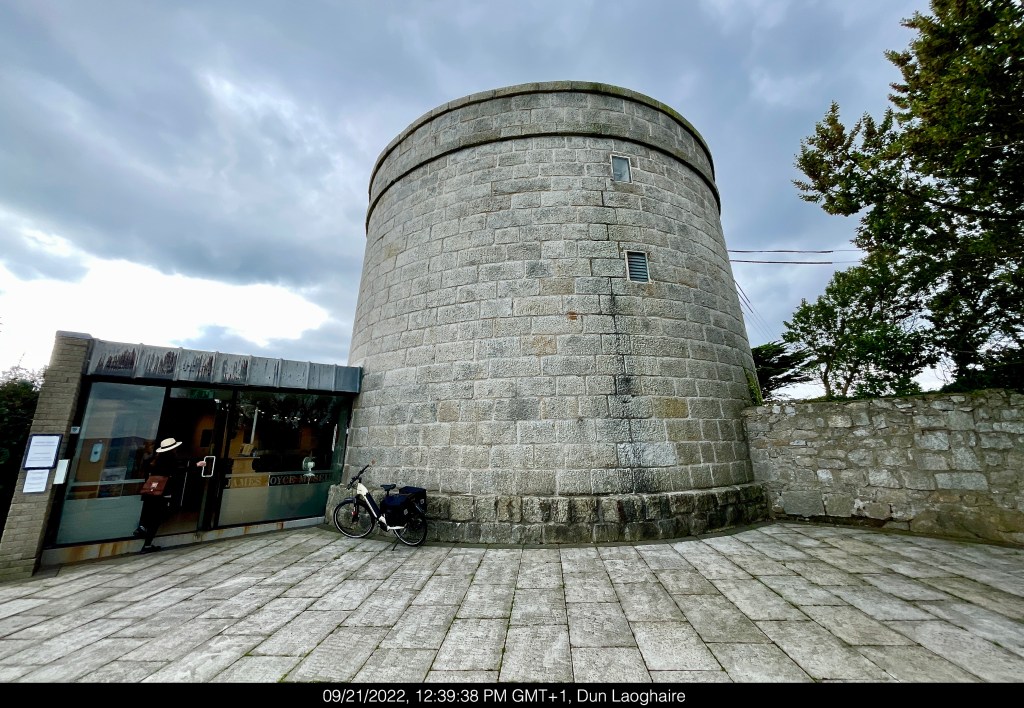
Among my personal ambitions for this journey was to learn more about the Irish author James Joyce and to visit Dublin locations associated with him. It wouldn’t be my first time doing that. Kathleen and I came to Dublin for a few days in early January 1987 so she could research her Irish ancestry in order to obtain an Irish passport. I don’t exactly understand the arrangement whereby Ireland and the U.S. allow for dual citizenship between them, but Kathleen succeeded and eventually obtained Irish citizenship and the passport (her two brothers and our daughter likewise now enjoy that benefit). While visiting the repository of Irish vital statistics with her, I did a bit of research myself and came away with a photocopy of the small strip of paper that was the birth certificate of James Augustine Aloysius Joyce (Feb . 2, 1882).
During that visit 35 years ago, a Dublin cousin of Kathleen’s drove us to two sites linked to Joyce: one of the many places his family lived (their finances, which started out strong, grew weaker over time and they moved often), as well as the Martello Tower in Sandycove, south of the city along the shore of Dublin Bay. The tower is one of the best-known Joycean attractions — a large round stone fortification built in 1804 as one in a string of more than two dozen such towers that formed a defensive line stretching along the bay and to its north and south (the British were concerned that Napoleon might set up a base in eastern Ireland from which to attack them across the Irish Sea). The Martello Tower at Sandycove, No. 11, was also the place where Joyce not only lived for a brief spell, but where he sets the opening scenes of his best-known work, the novel “Ulysses.” Seeing the tower in the dark that evening 35 years ago, I didn’t know its full history or what to make of it. I don’t remember being impressed.
Recently, however, in preparation for this longer visit to Dublin, I learned that a museum of Joyce artifacts, letters, and the like is attached to the tower (has been since the 1960s), and it welcomes visitors, asking only for donations. So on the second day of our visit to Ireland, September 21, we took the DART train south to a Dublin suburb, walked less than a mile along a beautiful seashore and this time got to see the tower from the inside.
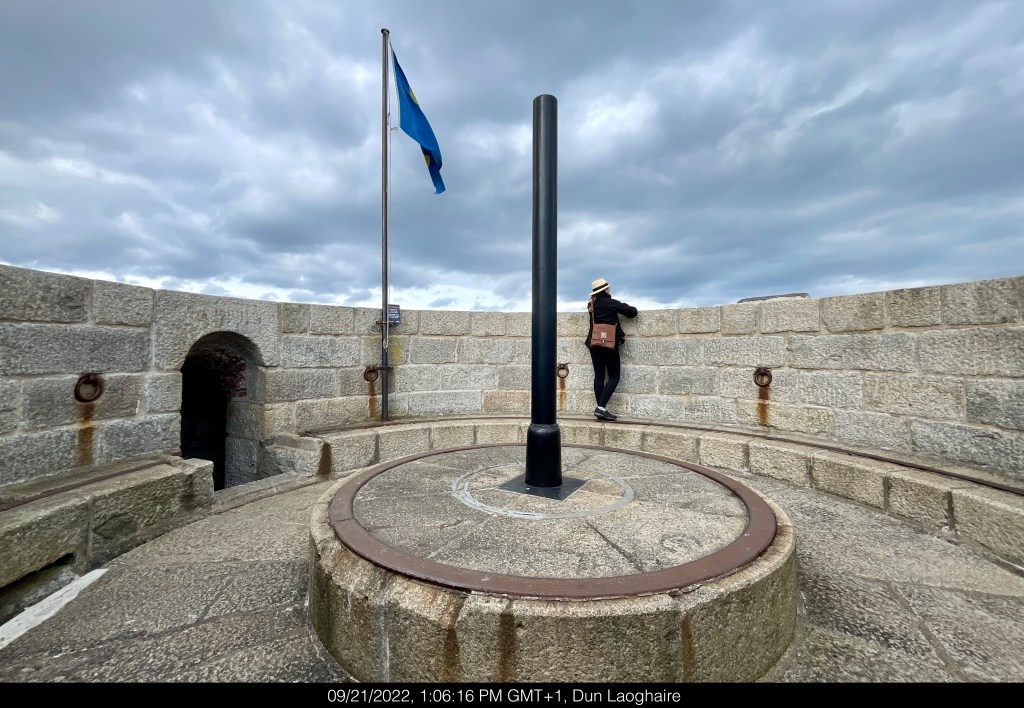
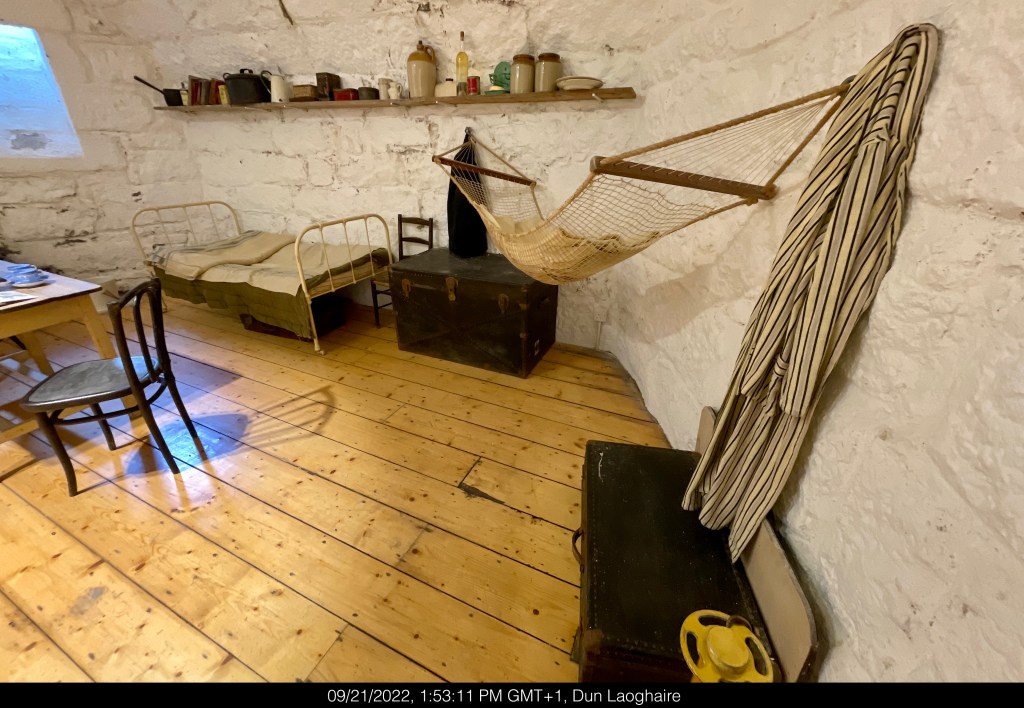
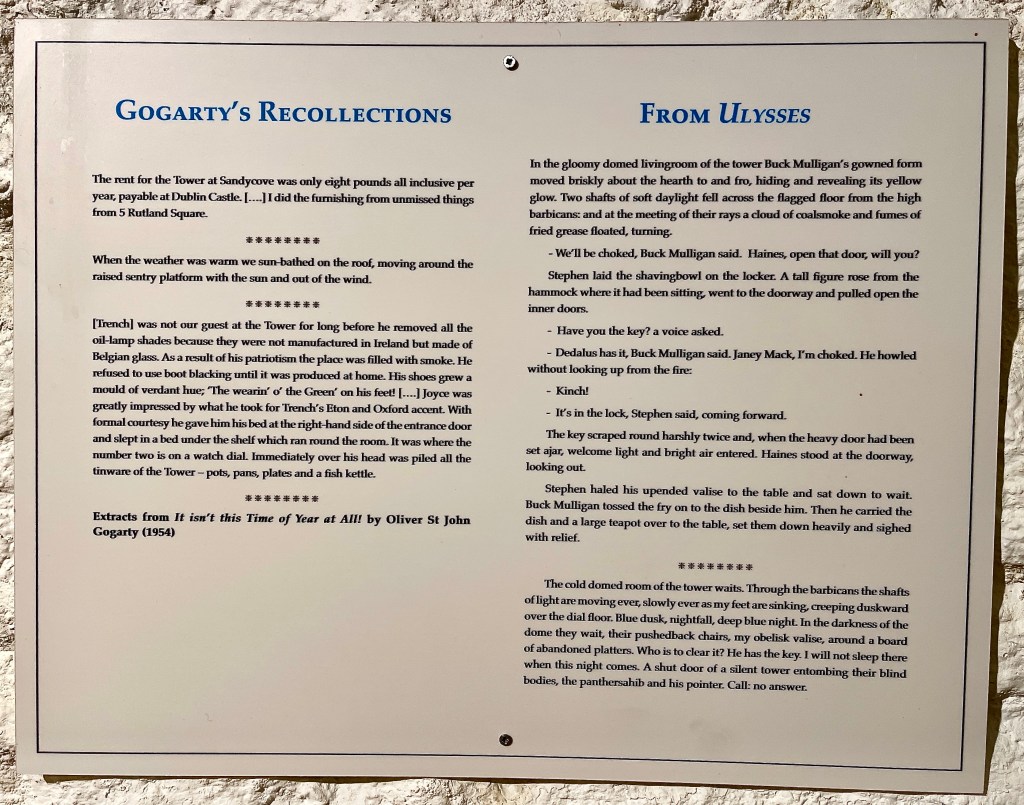
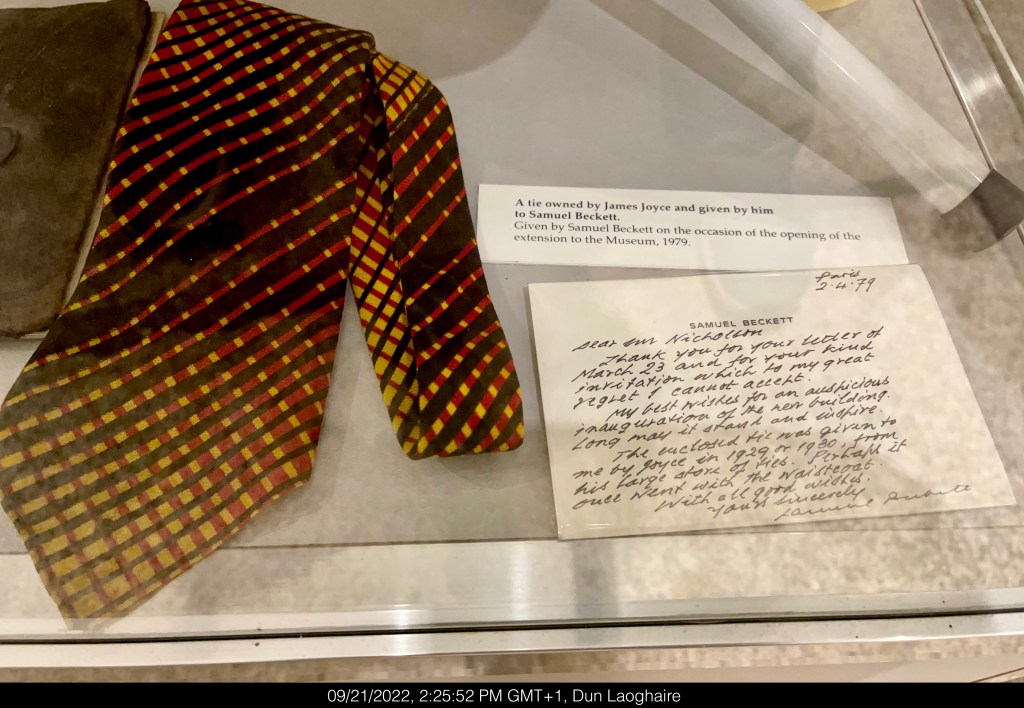
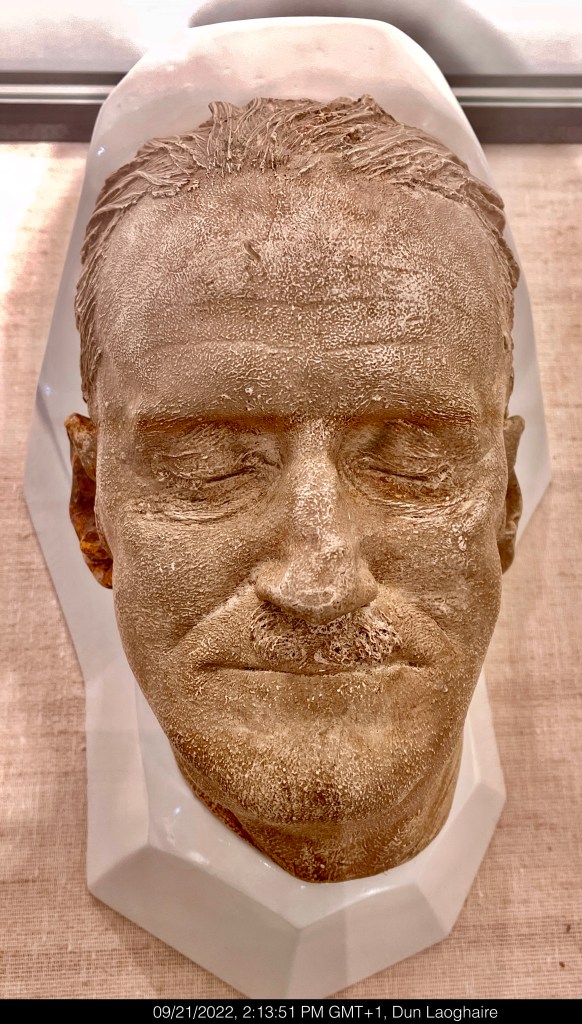
The museum, for those who want to know about Joyce, is excellent if small. It owns many priceless items, including a guitar he once played, his steamer trunk, a tie he gifted to the playwright and novelist Samuel Beckett, letters written by and to him, drawings of him, and many other artifacts, including Joyce’s death mask (photo below). The tower is fascinating, particularly the round interior room where Joyce’s friend, Oliver St. John Gogarty, invited him to live in late summer 1904. The attached photos tell more of the Joyce relationship with the tower, including what is alleged to have happened there one night not long after Joyce moved in.
 picoalaska