
We left Ireland on October 14, having spent 3½ week there, including 4 days in Belfast, Northern Ireland (part of the U.K.). For much of that time, I traveled as a sideman as my wife and her brother pursued family roots. All 4 of their grandparents were born in Ireland and emigrated, ending up in the U.S. But Kathleen and her brother Kevin wanted to dig further along the family tree, and their genealogical search bore tremendous fruits. They met an Irishman who is a third cousin and whom, until only a few months earlier, they knew nothing about. With the enthusiastic support of newly acquainted relative Maurice Daly, a retired school principal who lives outside of Dublin, we visited a farm in the vicinity of the parish of Aghadoe in Country Kerry where Kevin’s and Kathleen’s great-grandfather and Maurice’s great-grandfather, the brothers Cronin, had lived and worked. We walked the grounds of an old cemetery and, with Maurice’s guidance, found the Cronins’ graves.
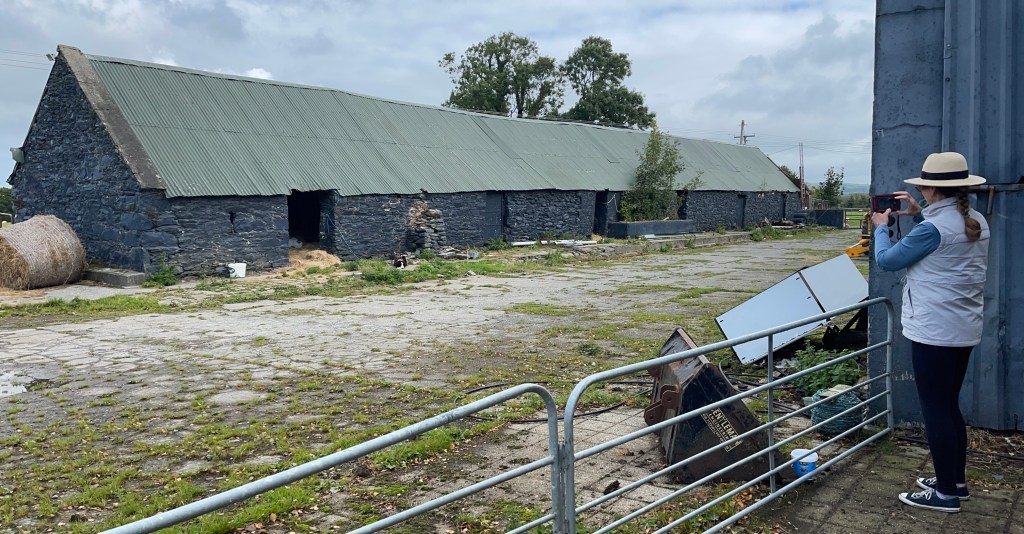
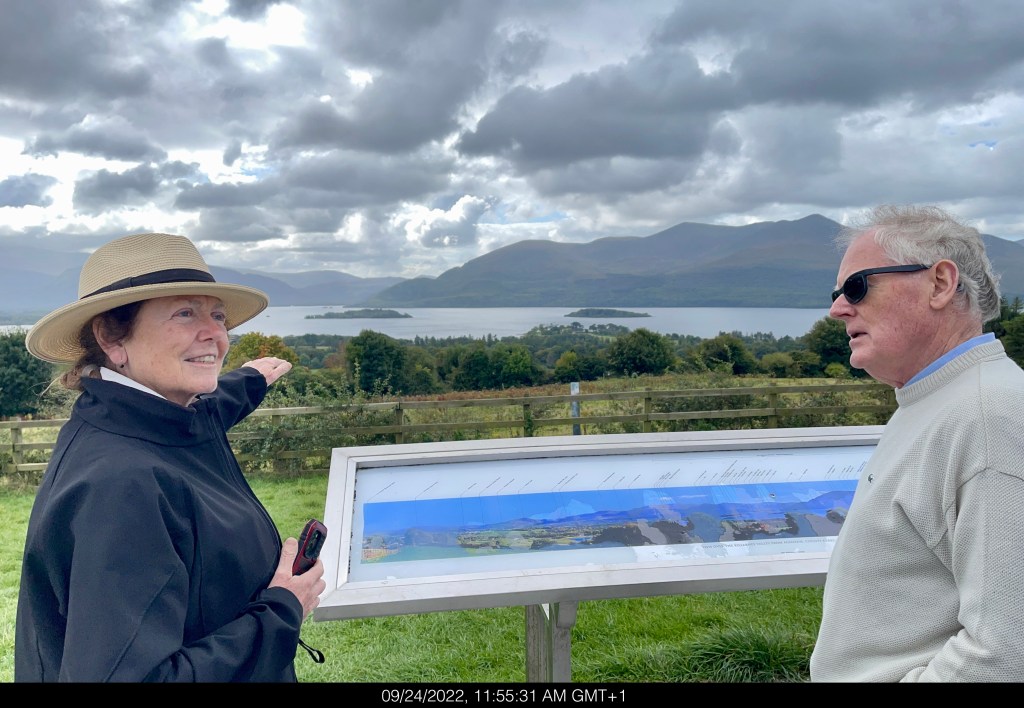
Near the parish of Glenbeigh, on the Iveragh Peninsula farther west in Kerry, something remarkable happened. Kathleen and Kevin knew that their maternal grandmother, Delia Sullivan, had left Glenbeigh at age 15, traveling alone to make a new life in America, where she would eventually meet and marry John Cronin. Delia moved out a few years after her father, John Sullivan, had died and after her mother had remarried and moved the family to a second home. Mossy, as Maurice is known, drove Kevin and Kathleen to Glenbeigh hoping to locate some remnant of their grandmother’s life. They stopped at a coffee shop and, on a whim, Maurice engaged a young woman working the check-out: Do you know any old-timers in town who could remember some of the families who lived here back when?
“My grandfather,” the woman said right off. Mossy wrote down the phone number, stepped outside the shop, and called him. The conversation yielded little, so Mossy and his charges drove off for the local cemetery to see what it could tell them. On the way they went down a wrong street and Mossy executed a U-turn using an adjacent driveway. Just as he began to back away, a man drove up who happened to live in that house. A conversation began. The man turned out to be the son-in-law of the cashier’s grandfather. He insisted now that Mossy call his father-in-law again, so Mossy did. The grandfather was hiking way up in the hills and he invited everyone to come up. No, that’s not going to happen, said Mossy, who nevertheless pressed on, asking the man if he knew of any other old-timer in the community. Yes, the grandfather said: Talk to John Barton.
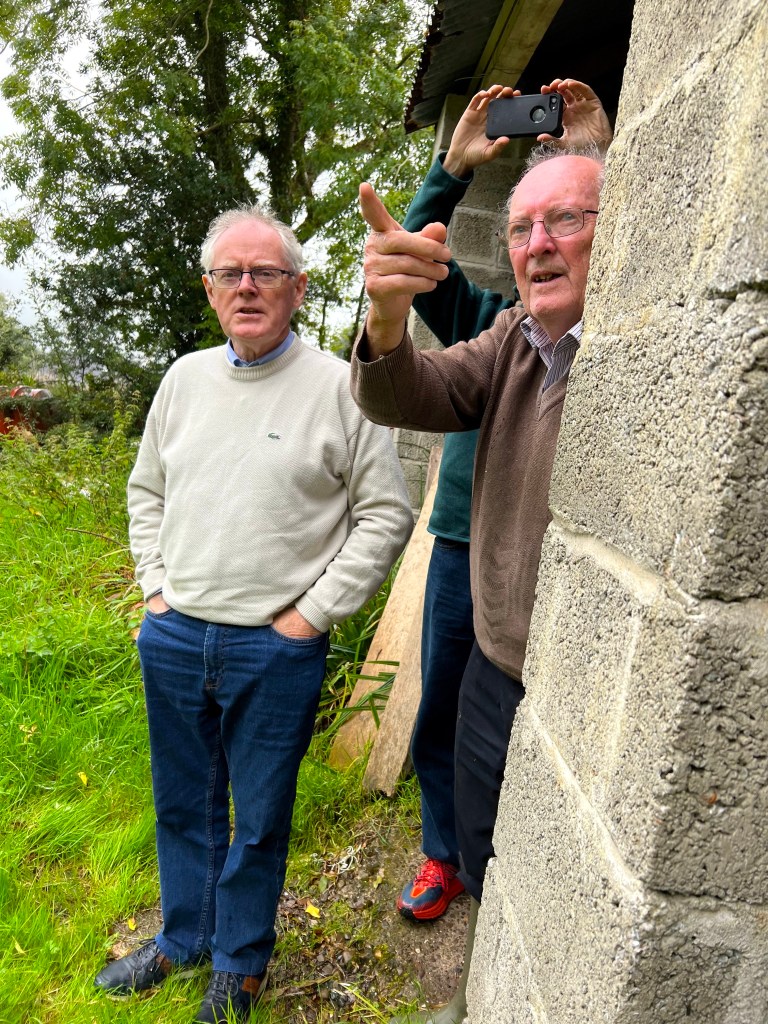
Armed with an address, Mossy and the others were soon sitting in the living room of John Barton and his wife, giving him the names and other information they had. Barton’s interest spiked. He told of a man named Sullivan who was known in these parts as “The Babe.” Now Kevin McCoy lit up: A distant relative had recently told him that his and Kathleen’s great-grandfather, John Sullivan, was known as The Babe. With this confirmation, Barton told them he knew exactly where John Sullivan and his family lived.
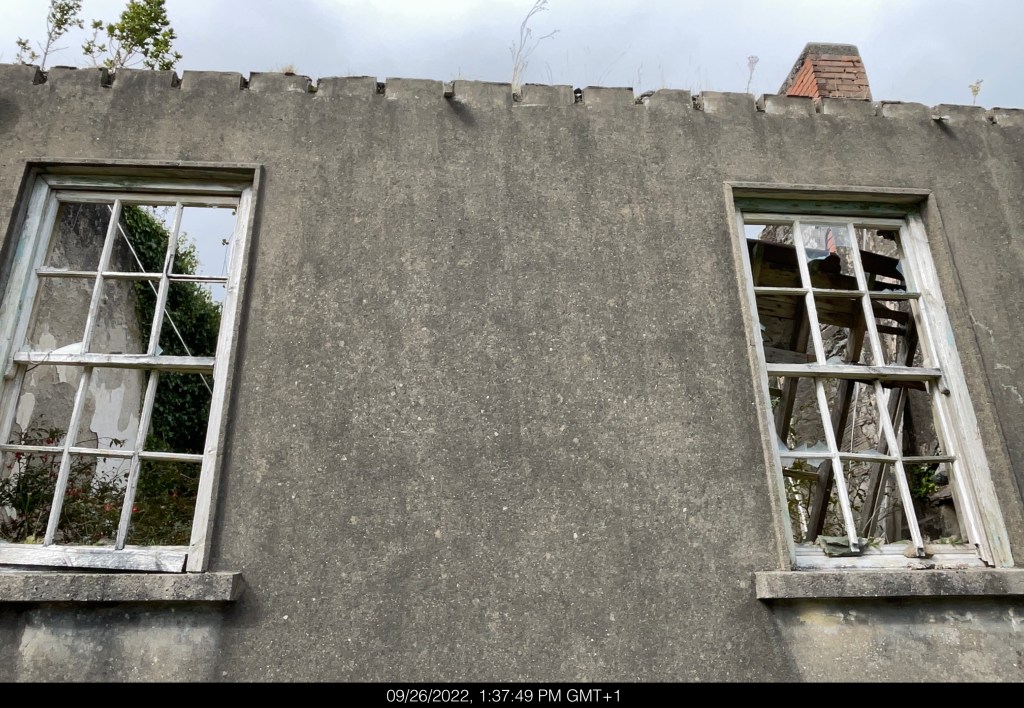
On a hillside commanding a view across a broad valley, they were soon gazing at the ruins of the Sullivan family home and, no more than 100 yards away along the same road, at the gender-segregated two-room schoolhouse Delia had attended, also in ruins. Dense vegetation had overtaken the fallen stone and concrete walls and grown through the empty doors and windows, and daylight poured through dilapidated roofs. Though it was all so far gone, what was left of the two buildings brought their meaning home for Kathleen and her brother, who had never expected to get so close to their own beginnings.
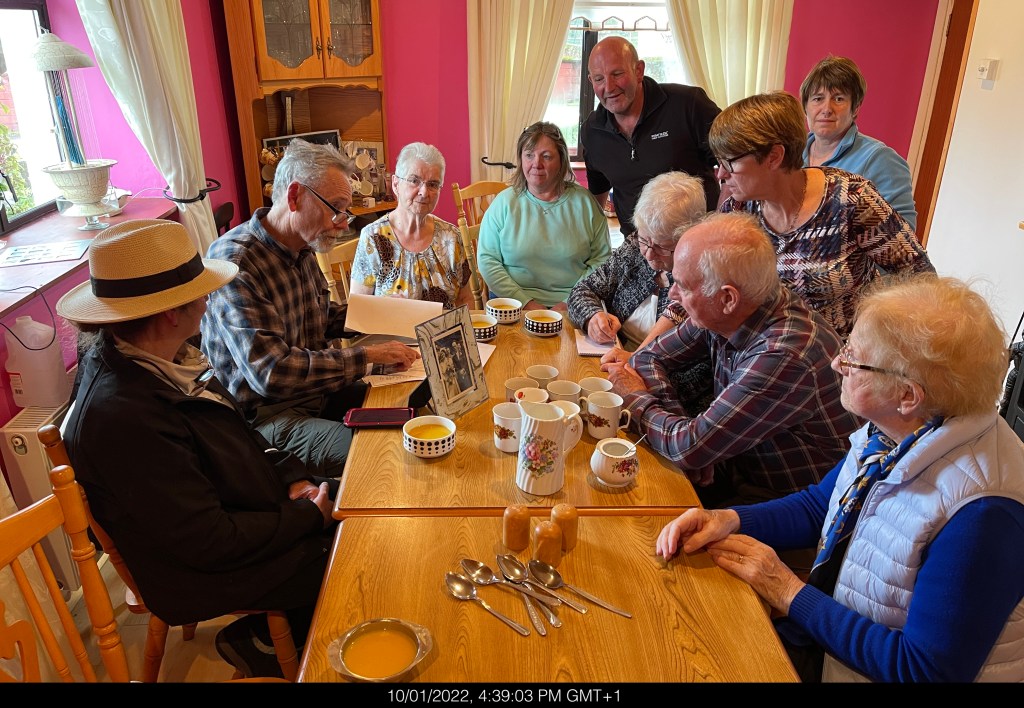
The story continued a week later, but on the other side of the family, that of Owen McCoy, Kathleen’s and Kevin’s father. Through his studies and with the help of Mossy’s research skills, Kevin had located and began communication with distant relatives of his grandfather, Owen’s father, in the village of Gurteen in County Sligo. By the time we arrived, the resident McCoys were waiting for Kevin to show up. As we drove down a hill approaching the house, the eldest, Gerry McCoy, was standing in the road waiting for us. After initial introductions, Gerry and several others — who began to arrive in ones and twos and seemingly did not stop coming — were sitting around a table enjoying tea, small sandwiches, homemade soup, cookies and Irish affability. Kevin produced his folder of family records and other documents and — his hands shaking with the emotion of the moment — told everybody what the papers showed: A few people long ago had picked up their lives in the old country and got themselves to Pennsylvania and New Jersey. They lived through times bad and good. Their descendants are still going strong way up in Alaska. And the people sitting around the table were connected to all of them.

 picoalaska